The Building That Helped Break Cooper Union's Free-Tuition Promise
41 Cooper Square was designed as a bold, green, world-class academic building. It also became tangled in the financial story that ended Cooper Union's century-and-a-half tuition-free tradition.
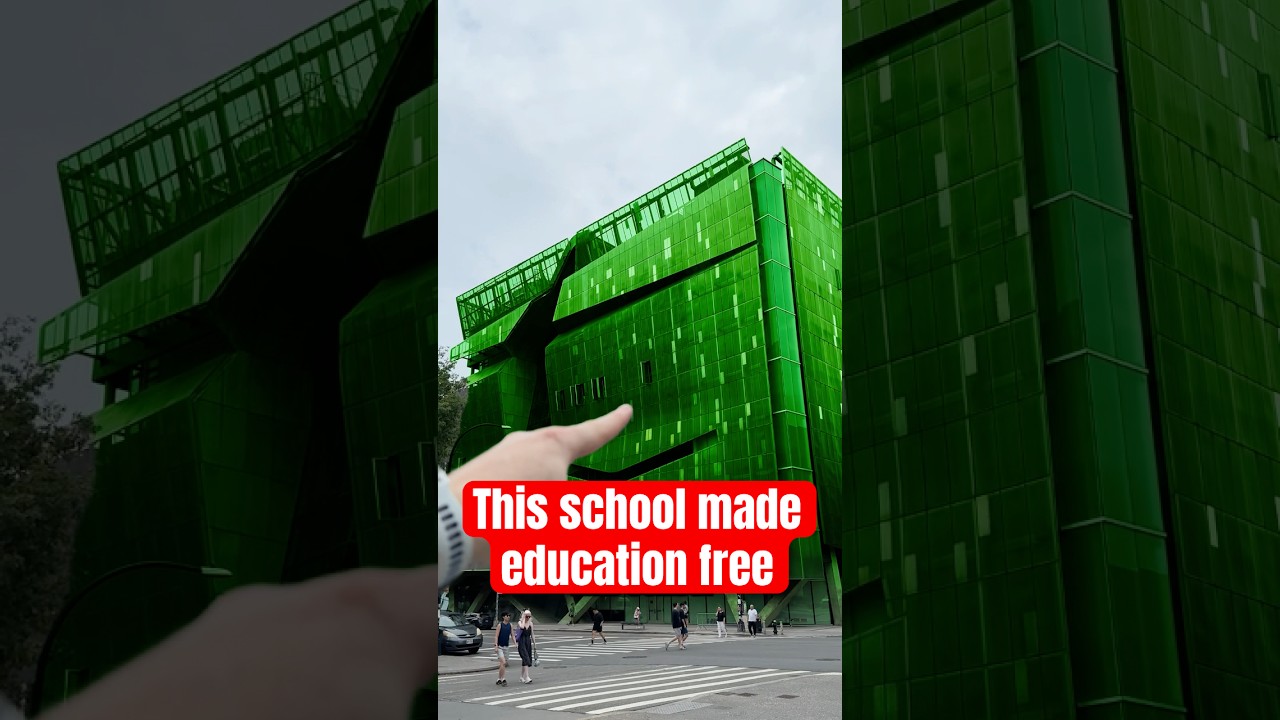
41 Cooper Square looks like a school that wanted to announce itself all at once. It does not slip into the East Village politely. Its steel skin folds, flares, and peels back from the glass underneath, turning a college building into a public object. From the street, it reads less like a campus facility and more like a machine for attention.
That was part of the point. When Cooper Union opened the building in September 2009, the school described it as a major new academic facility designed by Thom Mayne, the Pritzker Prize-winning architect behind Morphosis. It held laboratories, classrooms, studios, conference rooms, lounges, a gallery, and an auditorium. It was also a statement: Cooper Union, a small institution with an unusually large civic mythology, wanted a building that looked modern enough to carry the future.
But Cooper Union's mythology was never really about architecture. It was about access. Peter Cooper founded the school around a radical promise: education should be available to people who could not otherwise afford it. For more than 150 years, that ideal eventually became a full-tuition scholarship for every undergraduate student. The school was not merely generous. It was symbolically impossible, a New York institution that seemed to have escaped the economics of American higher education.
Then came 41 Cooper Square.
Where it is
41 Cooper Square, New York, NY 10003. The building sits across from Cooper Union's Foundation Building, near Cooper Square and the Bowery in Manhattan's East Village.
The building itself was ambitious in ways that made architectural sense. Its atrium works like an interior street, pulling light deep into the plan and pushing students across bridges, stairs, and shared spaces instead of hiding circulation in corridors. Its perforated stainless-steel wrapper gives the facade its signature texture while helping filter daylight. The project became one of New York's best-known examples of academic green architecture; contemporary coverage described it as the city's first LEED-certified academic laboratory building.
That green image mattered. Cooper Union was not just buying square footage. It was buying a future-facing identity, one that could make a 19th-century institution feel competitive in a 21st-century city. The trouble was that buildings have balance sheets.
The school's finances were already unusual because one of its most valuable assets was not on campus. Cooper Union owned the land beneath the Chrysler Building, a legacy real estate asset whose ground lease helped fund the school for generations. That quiet stream of rent was part of how the free-tuition promise survived.
To finance the new academic building and broader operating needs, Cooper Union borrowed heavily. Architect Magazine reported that the school was allowed to borrow $175 million against the value of the Chrysler Building land, and that the money helped fund the new Thom Mayne building. The number matters because it turns the story from a vague cautionary tale into a mechanism: a school with a famous free-tuition promise used its most valuable asset to support a new architectural bet.
Then the timing turned cruel. The building opened just after the 2008 financial crash. Instead of becoming a symbol of stability, the new Cooper Square building became part of a larger argument over debt, governance, ambition, and whether the school had risked too much of the machinery that made it special.
In 2014, Cooper Union began charging undergraduate tuition for the first time in its long history. Hyperallergic described the moment as a major reversal after more than 150 years, and students, alumni, and faculty treated it as more than a pricing change. It was an identity crisis. The school still offered substantial scholarships, but the absolute promise had cracked.
That does not mean 41 Cooper Square caused everything by itself. Institutions rarely fail or recover because of one building. Cooper Union's financial story includes endowment pressure, real estate strategy, leadership decisions, donor capacity, legal fights, and the broader cost of running a serious college in Manhattan. But the building became the physical object people could point to. It was the beautiful thing standing where a promise had started to wobble.
That is what makes 41 Cooper Square so interesting. It is not simply a "bad building" or a "good building." Architecturally, it is inventive, energetic, and deeply tied to the school's public ambitions. Financially, it sits inside a more uncomfortable story about how ideals get financed.
Cooper Union has since been working back toward the old promise. In 2018, its trustees approved a 10-year plan to return to full-tuition scholarships, with a goal of restoring that model by the end of the decade. That makes the building's legacy even more complicated. It may eventually stand not as the thing that ended free tuition, but as the object around which the school learned how fragile its founding idea had become.
Still, when you stand outside 41 Cooper Square, the lesson is hard to miss. The building is about openness, light, and connection. The financial story behind it is about leverage, risk, and consequence. Together, they turn one East Village facade into a question every ambitious institution eventually faces: how much future can you buy before you start spending the thing that made you worth saving?
Sources
- Cooper Union, 41 Cooper Square
- Cooper Union, 10 Year Plan to Return to Free
- Cooper Union, Update on the Chrysler Building
- Center for Architecture, Thom Mayne Talks 41 Cooper Square
- ArchDaily, The Cooper Union / Morphosis Architects
- Architect Magazine, Cooper Union Risks Tax Equivalency Payments From Chrysler Building
- Hyperallergic, Cooper Union Adopts Plan to Return to Full-Tuition Scholarships
Everyday Science, in your inbox.
Get new stories about the engineering, technology, architecture, and history around us.