The New York Island Where Trash Disappears Underground
Roosevelt Island was rebuilt as a cleaner, quieter version of New York. Its strangest trick is a pneumatic trash system that moves garbage through tubes instead of streets.
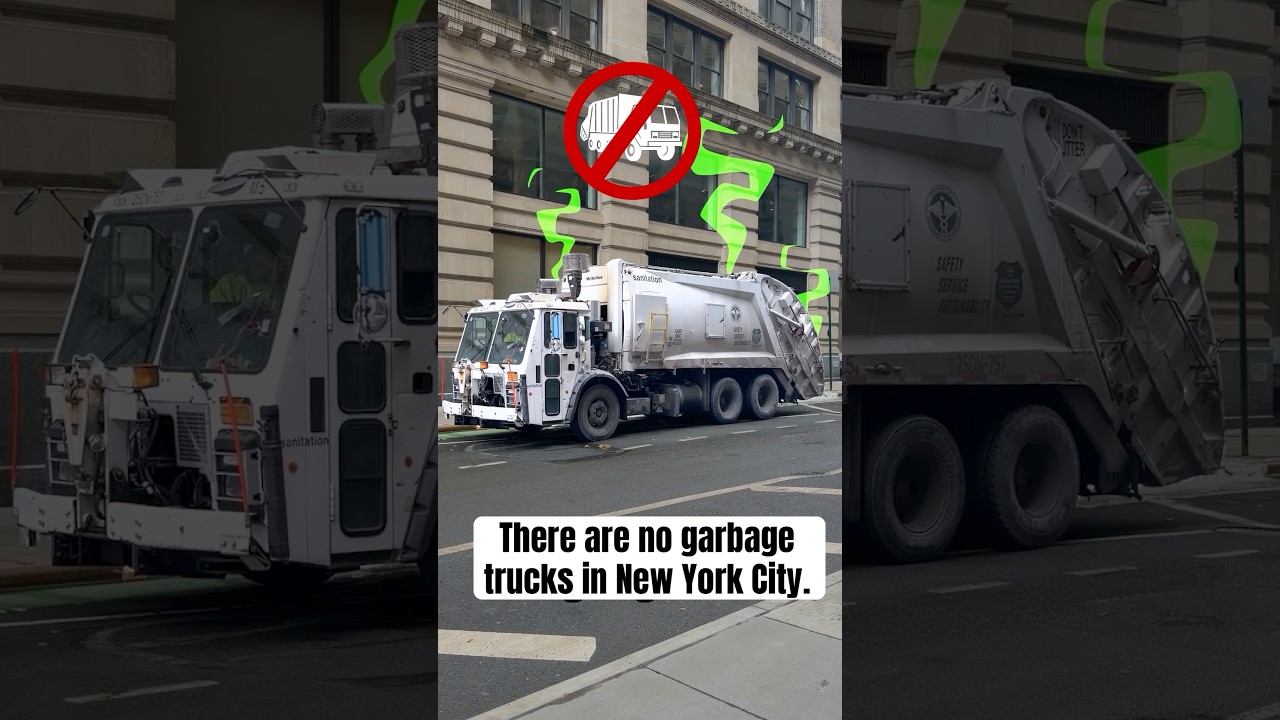
Roosevelt Island feels like New York City after someone quietly removed half the friction. It is still Manhattan, still close enough to hear the city breathing across the East River, but the usual machinery of the street is muted. The avenues are narrow. The skyline is everywhere. And for much of the island's residential core, one ordinary urban nuisance is almost invisible: garbage.
That is not because Roosevelt Island produces less of it. It is because the island was designed with a hidden second street system, one that does not move people or cars. It moves trash.
Under the buildings and paths is an automated vacuum collection system, usually called AVAC. Instead of bagging household waste for curbside pickup, residents send trash down building chutes. The waste waits in inlets until the system opens a valve and pulls it into a buried pipe network. From there, air pressure does what garbage trucks normally do: it carries the waste through the island to a central plant, where it is separated, compacted, and hauled away.
Where the system surfaces
The Roosevelt Island AVAC facility sits just north of Motorgate Garage, whose Maps-style street address is 688 Main Street, Roosevelt Island, New York, NY 10044.
The result is one of the strangest pieces of infrastructure in New York: a neighborhood where household trash can travel underground at highway speed.
The system makes the most sense when you remember what Roosevelt Island was supposed to become. For much of its earlier history, the island was where New York placed institutions it wanted separated from the rest of the city: hospitals, prisons, asylums, almshouses. By the late 1960s, many of those uses had closed or moved away, leaving the island with rare open land in the middle of the city.
That blank slate mattered. RIOC, the state public-benefit corporation that now manages the island, describes Roosevelt Island as a two-mile-long community shaped through redevelopment after Welfare Island's older institutions emptied out. The 1969 planning process gave New York an unusual chance to imagine a neighborhood before the usual mess of traffic patterns, curb cuts, service alleys, and existing buildings locked everything in place.
The planners wanted a cleaner, calmer residential community. That meant reducing cars. It also meant rethinking sanitation, because a narrow, pedestrian-minded island could not easily absorb the daily rhythm of conventional garbage pickup. If the point was to build a quieter neighborhood, piles of bags and rumbling trucks would defeat the premise.
So Roosevelt Island borrowed a futuristic idea that had already appeared at Walt Disney World: pneumatic waste collection. Disney used underground service systems to keep the operational side of the park away from the guest experience. Roosevelt Island used a similar logic for urban life. Keep the necessary mess, but move it out of sight.
What makes AVAC compelling is that it is both high-tech and bluntly physical. There is no magic in the tube. Sensors detect when an inlet is full. Valves open. Large fans create suction. Trash moves through steel pipes toward the plant. Untapped New York describes the waste traveling through 20-inch tubes at roughly 60 to 70 miles per hour. Wired, which toured the system in 2010, reported average pipe speeds closer to 30 miles per hour, with peaks up to 60. Either way, the point is the same: garbage is not sitting on the curb. It is moving through infrastructure.
That infrastructure has done real work. Envac, the company behind the system's modernization, lists Roosevelt Island's network at 14,534 feet of pipe and 2,555 tons of waste per year. Waste360 reported in 2019 that the system had served the island for more than 40 years and was slated for a $1.7 million upgrade intended to reduce energy use, improve operations, and extend automated collection for decades.
But the system's elegance is also its weakness. A trash truck can ignore a bad decision by one resident. A pneumatic tube cannot. Mattresses, Christmas trees, exercise equipment, construction debris, and other oversized objects can turn the island's hidden advantage into a very visible problem. In March 2026, RIOC issued an advisory that the west-side AVAC line was offline because of a clog; affected buildings were told to close their chutes, and DSNY pickups were arranged until the blockage could be cleared.
That is the tradeoff with infrastructure that disappears when it works. Most people only notice it when it stops.
Roosevelt Island's AVAC is not simply a novelty. It is a reminder that sanitation is urban design. Garbage trucks are not just vehicles; they shape streets. Bags on sidewalks are not just bags; they shape smell, rats, curb space, and the feeling of a block. By moving waste underground, Roosevelt Island changed the everyday texture of the neighborhood.
It did not eliminate garbage. It changed where the city asks you to look at it.
That may be the island's real lesson. New York often feels inevitable, as if its inconveniences are permanent facts of density. Roosevelt Island proves some of them are design choices. The city can decide whether trash belongs on sidewalks or in tubes, whether service systems dominate the street or stay behind the scenes, whether a neighborhood is built around the truck or the pedestrian.
The hard part is that better systems need maintenance, money, and rules people actually follow. Roosevelt Island's vacuum tubes are now old enough to be both a working model and a cautionary tale. They show what a cleaner city can look like. They also show how fragile that cleanliness becomes when the invisible system underneath is asked to carry more than it was built to handle.
Sources
- Roosevelt Island Operating Corporation, Who We Are
- Envac, Roosevelt Island, NY project profile
- Waste360, NYC's Roosevelt Island AVAC Waste Collection System Gets Upgrade After 40-plus Years
- Untapped New York, Inside Roosevelt Island's Futuristic Pneumatic Tube Trash System
- RIOC, West side AVAC Line Currently Offline Due to Clog
- Wired, New York City's Trash-Sucking Island
- Atlas Obscura, Roosevelt Island AVAC System
- Parking.com, Motorgate Garage
Everyday Science, in your inbox.
Get new stories about the engineering, technology, architecture, and history around us.